
A Logo Is Not a Brand

Many business owners believe that once they have a logo, they have a brand.
It's an understandable assumption. After all, a logo is often the first thing people see. It's displayed on websites, business cards, social media profiles, signage, packaging, and marketing materials.
But here's the reality:
A logo is not a brand.
A logo is one component of a much larger system that shapes how people perceive, remember, and trust your business.
Understanding the difference can dramatically improve how you market your company and why customers choose you over competitors.
What a Logo Actually Does
A logo serves as a visual identifier.
Its purpose is to help people recognize your business quickly and consistently across different platforms and touchpoints.
Think about some of the world's most recognizable companies. Their logos are memorable because they have become associated with specific experiences, values, products, and expectations.
The logo itself is not creating those feelings.
The brand is.
A logo simply becomes the visual shortcut people use to recall everything they know about a company.
What a Brand Really Is
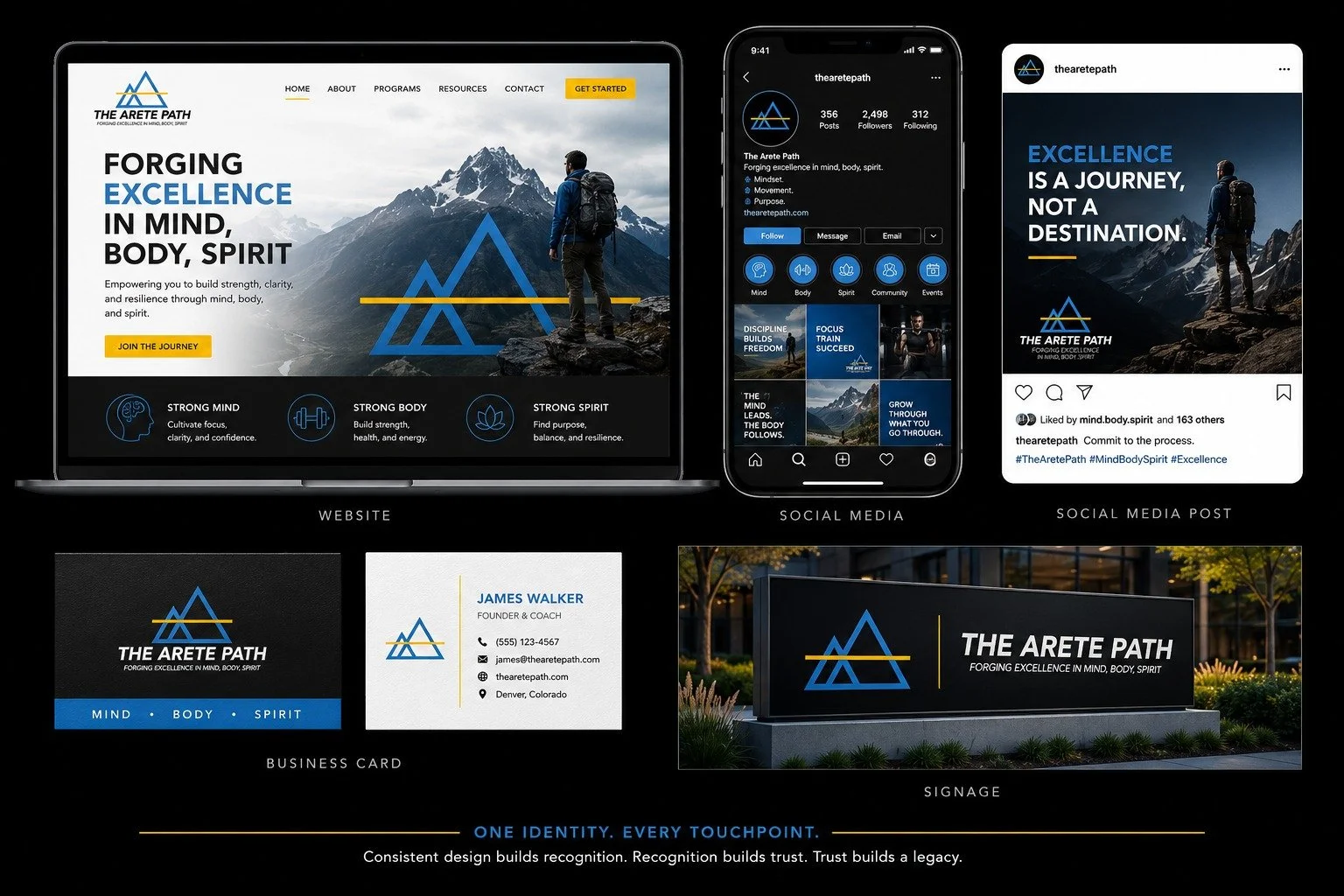
A brand is the complete perception people have of your business.
It includes:
Your visual identity
Your messaging
Your customer experience
Your reputation
Your website
Your marketing
Your products and services
Your values
Your personality
Every interaction someone has with your company contributes to your brand.
Your logo is only one piece of that puzzle.
A beautifully designed logo cannot overcome poor customer service, confusing messaging, inconsistent marketing, or a frustrating website experience.
Likewise, a simple logo can become incredibly powerful when it represents a company that consistently delivers value and builds trust.
The Problem With Logo-Only Thinking
Many businesses invest heavily in a logo redesign while overlooking the systems that support it.
The result often looks something like this:
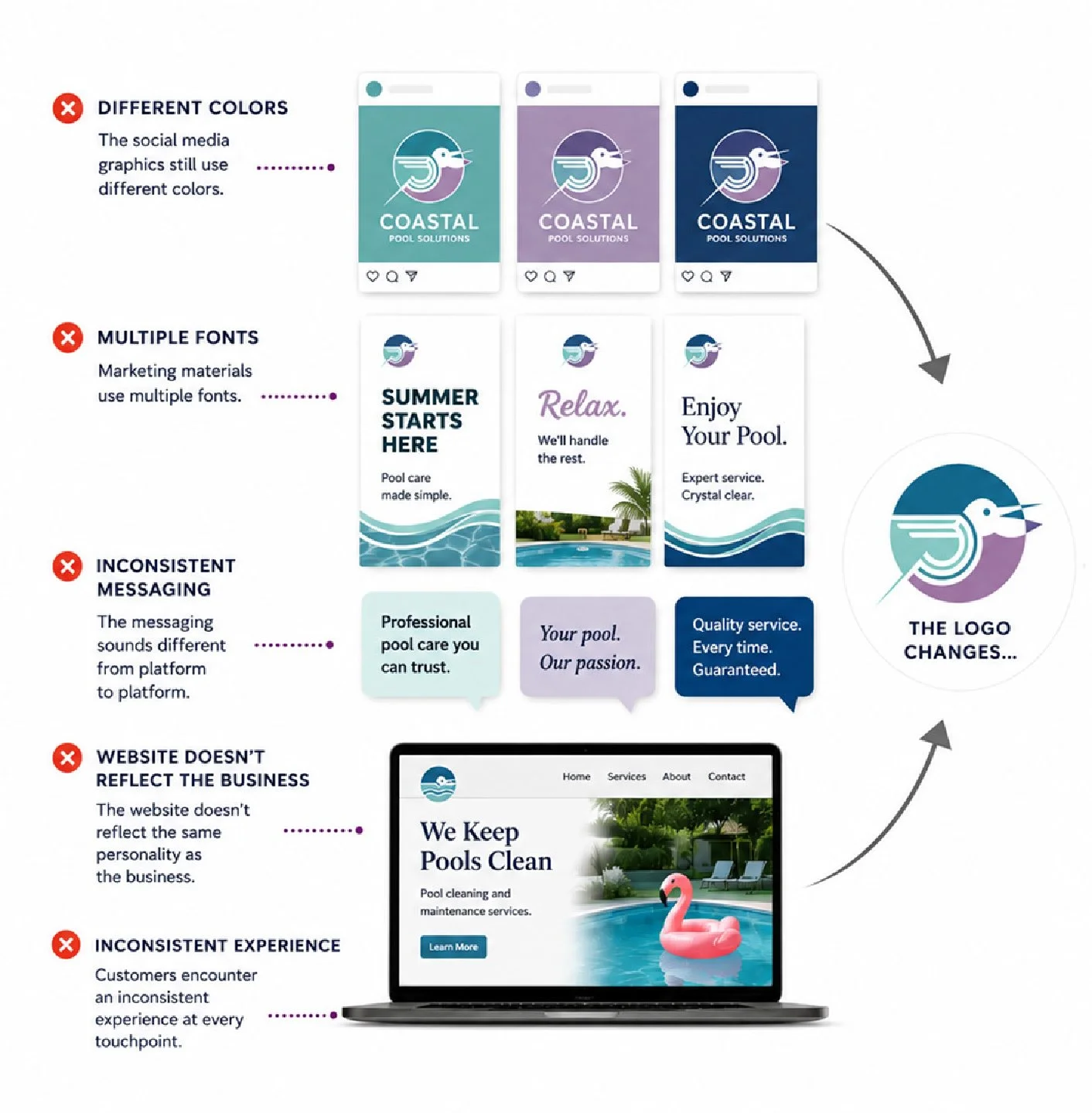
A new logo appears on the website.
The social media graphics still use different colors.
Marketing materials use multiple fonts.
The messaging sounds different from platform to platform.
The website doesn't reflect the same personality as the business.
Customers encounter an inconsistent experience at every touchpoint.
The logo changes, but the perception of the business remains largely unchanged.
That's because branding is about consistency, not just appearance.
A Brand Is a System
Strong brands are built on systems.
Those systems create consistency regardless of where someone encounters your business.
A complete visual identity system typically includes:
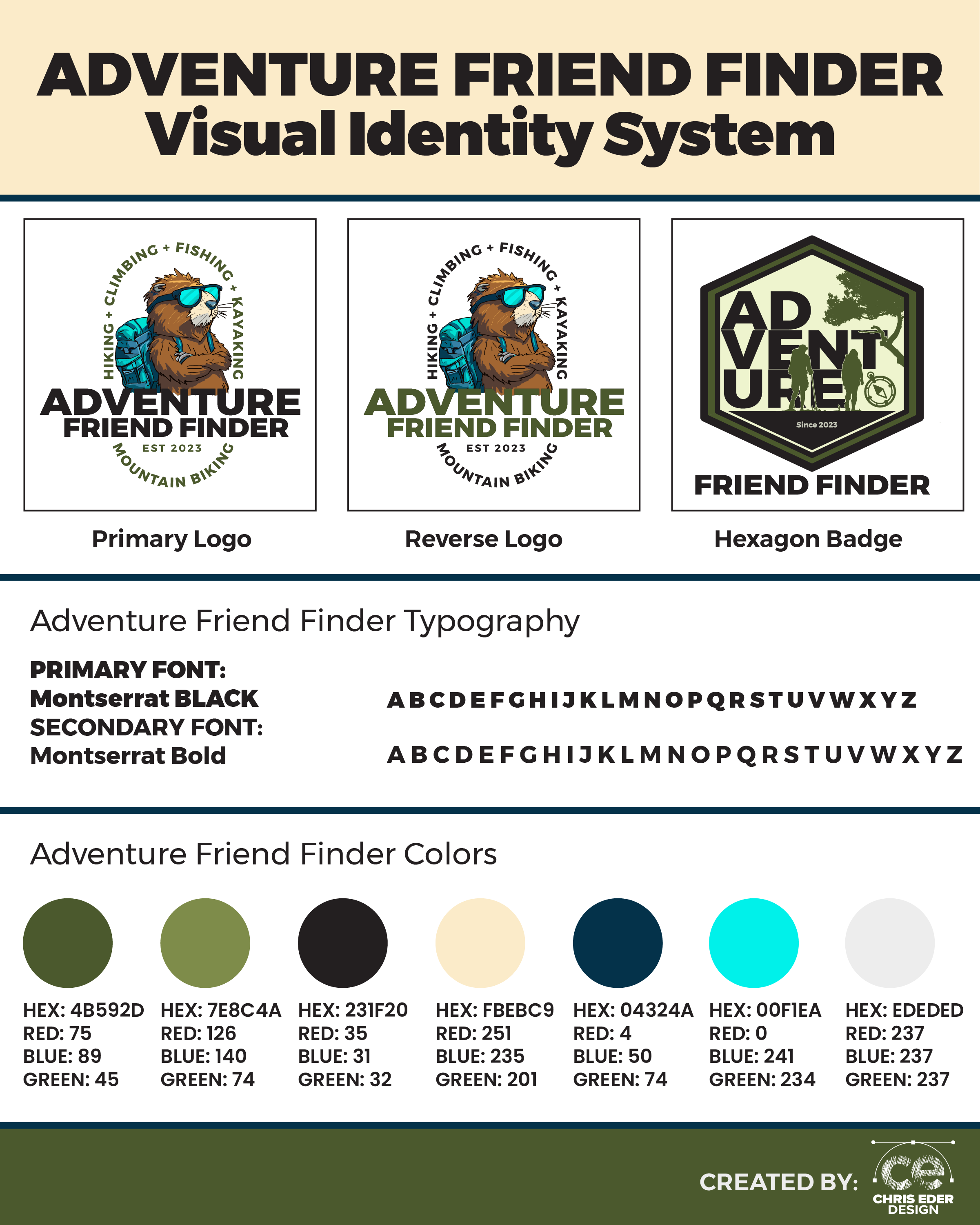
Primary logo
Secondary logo variations
Icon marks
Color palette
Typography standards
Photography direction
Graphic elements
Brand voice guidelines
Marketing standards
Together, these elements create a recognizable experience that customers learn to trust.
Without a system, every marketing piece becomes a new design decision.
Over time, that inconsistency weakens recognition and makes it harder for customers to remember your business.
Why Consistency Builds Trust
People naturally trust what feels familiar.
When your website, social media, print materials, email marketing, and advertising all share a consistent identity, customers begin to recognize your business instantly.
That recognition creates confidence.
Confidence creates trust.
Trust creates action.
A strong brand removes uncertainty and helps potential customers feel comfortable choosing you over competitors.
The logo contributes to that process, but it cannot accomplish it alone.
The Businesses That Win Think Beyond the Logo
Successful businesses understand that branding is not about creating a single graphic.
It's about creating a complete experience.
They focus on:
Consistent visual presentation
Clear messaging
Professional websites
Strong customer experiences
Strategic marketing
Long-term recognition
Their logo becomes powerful because it represents all of those things working together.
Final Thoughts
A logo is important.
It is often the first visual connection someone has with your business.
But a logo alone cannot define your reputation, build trust, communicate your value, or create customer loyalty.
Those outcomes come from a complete brand system working together to create a consistent experience.
The strongest brands are not recognized because of their logos.
Their logos are recognized because of the brands they have built behind them.
If your business has a logo but lacks a cohesive visual identity system, you may not have a branding problem. You may simply have an incomplete brand.
When strategy, design, messaging, and consistency work together, your logo becomes far more than a graphic. It becomes a symbol of trust, recognition, and long-term business growth.
