
DESIGN IS AN INVESTMENT, NOT AN EXPENSE - Turning Branding and Websites Into Measurable Business Growth
When design is treated as a system, it stops costing money and starts generating it.
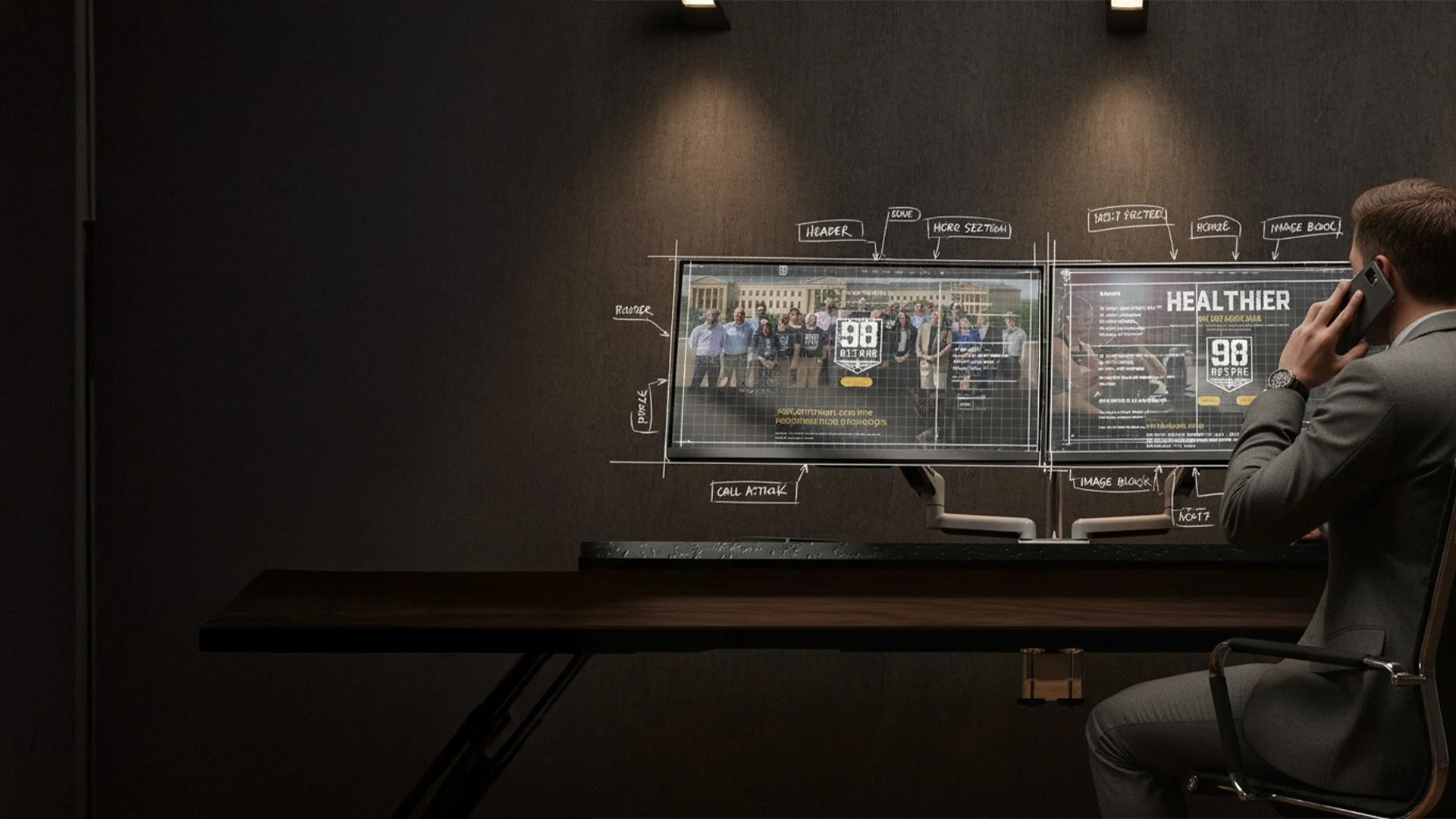
Design only feels expensive when it’s disconnected from strategy.
That’s the part most businesses miss.
They invest in a logo, a website, or a rebrand, but without a clear foundation behind it, those assets don’t perform the way they should. They look good for a moment, but they don’t create momentum. They don’t reduce friction. They don’t support growth.
So the conclusion becomes predictable. “Design is expensive.” In reality, bad design decisions are expensive. Strategic design is an investment.
At Chris Eder Design, the focus is not on creating visuals that impress. It’s on building systems that support your business long after launch. When design is approached this way, it becomes measurable. It becomes efficient. And most importantly, it becomes valuable.
WHY DESIGN IS OFTEN MISUNDERSTOOD
Most businesses are introduced to design through aesthetics.

Color palettes. Fonts. Logos. Layouts.
These are important, but they are not the point. When design is treated as decoration:
Decisions are based on preference
Systems are inconsistent
Updates become difficult
Results are unpredictable
That’s when design feels like an expense. Something you pay for once, and then question later. The problem isn’t the investment. It’s the lack of structure behind it.
WHAT STRATEGIC DESIGN ACTUALLY DOES
Strategic design operates differently. It focuses on how your brand and website function, not just how they look. When done correctly, design:
Guides users through information clearly
Builds trust before a conversation begins
Reduces hesitation and confusion
Supports conversion without pressure
Creates consistency across every touchpoint
This is where design becomes infrastructure. Instead of asking, “Does this look good?” The better question becomes, “Does this work?”
WHERE ROI COMES FROM
Design ROI doesn’t come from a single moment. It comes from how a system performs over time.
1. REDUCED FRICTION
A well-structured website removes confusion. Visitors understand where to go, what to read, and what to do next. That clarity leads to longer engagement, better user flow, and stronger conversion rates. Poor design creates hesitation. Good design removes it.
2. SHORTER SALES CYCLES
When your website communicates clearly, it answers questions before they’re asked. That means:
Fewer back-and-forth emails
Better-qualified leads
Faster decision-making
Your website does part of the selling for you.
3. INCREASED TRUST
Trust is built visually before it is built verbally. Consistent branding, clean typography, and intentional layout signal professionalism immediately. That first impression has a direct impact on whether someone stays or leaves. Trust reduces resistance. Resistance slows growth.
4. OPERATIONAL EFFICIENCY
Design systems eliminate guesswork internally. When your brand has clear rules:
Content creation becomes faster
Teams make decisions with confidence
Updates don’t require starting from scratch
This is where design starts saving time, not just shaping perception.
5. LONG-TERM BRAND EQUITY
Strategic design compounds. Instead of redesigning every year, your brand evolves within a system that was built to scale. That consistency increases recognition, credibility, and long-term value. A logo becomes an asset. A website becomes infrastructure.
WHY PLATFORM CHOICE MATTERS (AND WHY IT DOESN’T)
Many businesses assume ROI comes from choosing the “right” platform. It doesn’t! ROI comes from how the platform is used.
As a Squarespace Gold Partner, Chris Eder Design builds websites that combine strategy with usability. Squarespace allows for:
Custom, strategic design
Clean SEO structure
Easy updates without developer dependency
Scalability for growing businesses
The platform supports the system. The system drives the results.
REAL-WORLD APPLICATION

This approach isn’t theoretical. It shows up in real projects. Take the work done with 98 Octane.
Like many growing brands, the challenge wasn’t just visual. It was structural. The website needed to communicate clearly, guide users without friction, and support the business in a way that didn’t require constant rework or second-guessing.
Instead of focusing on surface-level changes, the work centered on:
Clarifying messaging and hierarchy
Improving how users move through the site
Creating a structure that supports conversion
Ensuring the site is easy to manage moving forward
That shift matters. Because when a website is built as a system:
Visitors understand what they’re looking at faster
Decisions feel easier
The brand feels more established
Updates don’t require starting over
That’s where ROI starts to show up. Not in a single moment, but in how the site performs every day.
HOW TO EVALUATE YOUR OWN DESIGN ROI
Most businesses don’t need more design. They need better alignment. Ask yourself:
Does my website clearly guide users toward action?
Is my brand consistent across platforms?
Can I update my site easily without outside help?
Does my design reduce confusion or create it?
Am I redesigning frequently instead of improving systematically?
If the answers are unclear, the issue is not effort. Its structure.
DESIGN AS A LONG-TERM INVESTMENT
Investments are not judged by their initial cost. They are judged by their return over time.
Strategic design:
Reduces inefficiencies
Improves conversion
Builds trust
Supports scalability
That’s what makes it valuable. When design is approached this way, it stops being something you question. It becomes something you rely on.
Build Something That Works
If your brand feels inconsistent or your website isn’t performing the way it should, the issue may not be the design itself. It may be how it was built.
A strategic approach changes that.
→ Start a conversation with Chris Eder Design
